'Never-Trump' Republicans Cheered GOP Gerrymandering and Voter Suppression
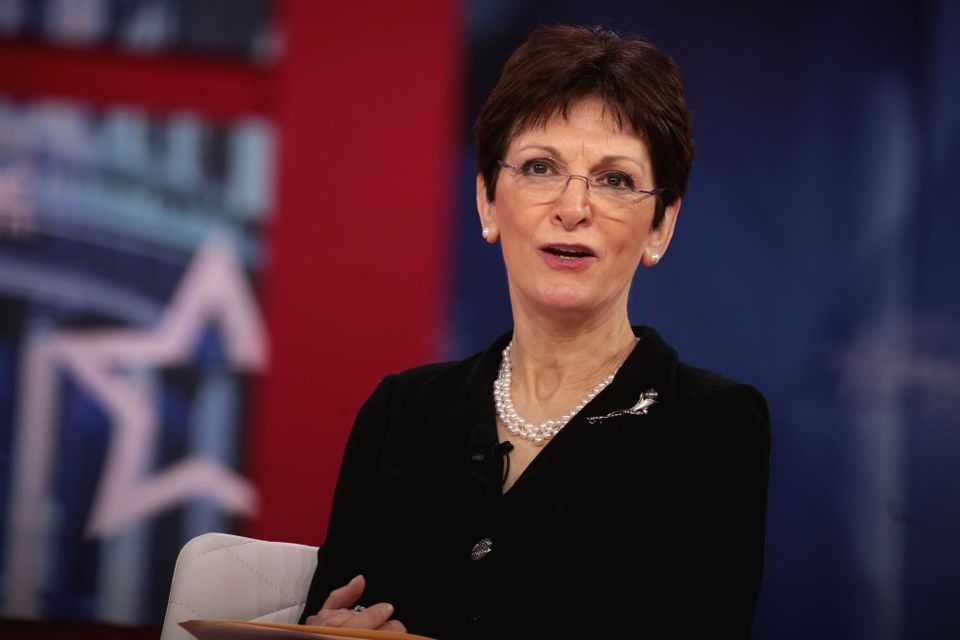
Commentators at The Bulwark, formed as a conservative “Never Trump” outlet, are frequently invited to appear in the media, especially MS NOW and NPR, to explain political messaging and situate Democratic strategy for liberal-leaning audiences. The outlet’s website says they’re helping to save democracy.
They’re cashing in on gullible liberals. The Bulwark’s allies in the Tea Party gerrymandered states and passed voter suppression laws that pushed politics rightward ahead of Donald Trump’s Electoral College win in 2016.
First, Never Trumpers try to contrast the crassness and violence of the MAGA movement with the professional, ostensibly-constitutional GOP—skipping over the rise of the Tea Party as a force in Congress. If you were politically online in 2009–2010, you remember that the Tea Party movement featured racist rhetoric and tolerated conspiracy theories. The Tea Party energy ushered into office Republican politicians who gerrymandered the country, hampering democracy for generations.
A sketch of the redistricting push: as covered in Ratf**ked by journalist Dave Daley, in 2010 the Republicans’ $30 million REDMAP plan targeting state legislative races succeeded in flipping chambers and creating GOP trifectas in Ohio (flipping lower chamber), Pennsylvania (lower), Michigan (lower), and Wisconsin (both). Also, in North Carolina, Republicans flipped both state legislative chambers (with a then-Democratic governor), and in Florida, Rick Scott won the governorship.
Rampant GOP gerrymandering at the congressional level followed in 2011–2012. A report from the nonpartisan Brennan Center for Justice in 2017 found that in 26 large states, gerrymandered districts gave the GOP a roughly 16-seat U.S. House advantage, based on data from the 2012, 2014, and 2016 election cycles.
Once in office after 2010, in key states, GOP lawmakers enacted voter suppression measures that were still in effect for 2016 elections: in Wisconsin, one of the strictest voter ID laws in the nation and cuts to early voting; in Ohio, limits on early voting and absentee voting; in Florida, cuts to early voting (“souls to the polls”) and crackdown on voter-registration drives. In Michigan, bills introduced to allow same-day registration and make absentee voting more accessible were blocked by Republicans. In North Carolina, GOP lawmakers in 2013 passed bills including strict voter ID and cutting early voting, measures struck down in July 2016 in federal court.
Gerrymandering the States, a book published in 2021 by Cambridge University Press, produced an original study of 95 state legislative maps before and after the 2011 redistricting. They concluded: “many of the governing parties that drew extremely biased maps also enacted greater restrictions on voter eligibility and ballot access prior to the 2016 presidential election.”
The Bulwark’s co-founders include Charlie Sykes, former Wisconsin conservative talk radio host whose show prominently boosted state Republicans like gerrymandering Gov. Scott Walker. (Sykes attended the same high school as I did in suburban Milwaukee.) Wisconsin was so egregiously gerrymandered by Republicans in 2011 that still, in 2018, its district boundaries qualified as the worst in the world analyzed by the Electoral Integrity Project, a project of Harvard University and the University of Sydney.
Sykes reportedly had ambitions to fund voter suppression farther and wider: the Milwaukee political writer Bruce Murphy says that Sykes applied to be the president of the right-wing Bradley Foundation, a major funder of voter suppression efforts. Of course, voter suppression measures largely affect communities of color: a 2024 Brennan Center analysis found that the gap between white and nonwhite voter turnout increased almost twice as fast in jurisdictions that were stripped of Voting Rights Act protections, with state governments adding restrictive voter ID laws and decreased access to polling sites.
As Mona Charen, policy editor, wrote in a 2016 National Review Online column titled “How Charlie Sykes Helped Turn Wisconsin Red,” Sykes' talk-radio powerhouse also promoted former Trump chief of staff Reince Priebus, Sen. Ron Johnson, and many others. By 2017, after decades of promoting the political careers of conservatives like former House Speaker Paul Ryan, Sykes recanted in the New York Times.
Wealthy Donors to Romney, Jeb Bush, and Trump
The Bulwark wants liberals to believe that establishment Republicans like Mitt Romney and Jeb Bush would not have allowed democracy to be as gutted as the GOP has under Trump. Tim Miller, writer-at-large for The Bulwark, brands his history of working in Republican campaigns, like Jeb Bush’s presidential bid, as trying to pull the GOP back from the brink of MAGA. He still gives hat-tips to Mitt Romney for not following the pull of MAGA allegiance.
Look back more carefully: many prominent Trump 2024 campaign donors had previously given to the super PACs of Romney in 2012 and Jeb Bush in 2016, according to Federal Election Commission records.

These wealthy conservative donors knew what they’d be getting with Trump’s 2024 comeback, when his campaign proposed deploying the U.S. military to face protestors and supercharging ICE. Surely now, Romney’s finance industry donors are thrilled with Trump’s tax cuts for the wealthiest Americans and deregulation, as Jeb Bush’s fossil fuel industry backers are with Trump’s polluting energy policies.
- Hedge fund billionaire and Republican megadonor Paul Singer, a $5.4 million Trump backer last cycle, gave $1 million to Romney’s super PAC in the 2012 cycle.
- Coal magnate Joe Craft, a $1 million Trump backer, gave $1 million backing Romney.
- Banking billionaire Warren Stephens, a $2 million Trump 2024 backer, gave $500,000 backing Romney.
- Former Sen. Kelly Loeffler (R-Ga.), whose husband gave $1.3 million backing Trump last cycle, gave $750,000 backing Romney.
- Home Depot founder Bernie Marcus, a $1 million Trump backer, gave $20,000 to Romney’s group.
- Billionaire Trump donors Nelson Peltz, Marc Rowan, and Marc Andreessen ($5.3 million) all gave to Romney’s super PAC, as did others.
Jump to the 2016 cycle, by which time the GOP’s fateful gerrymandering after 2011’s Census had padded Republicans’ House margins: up to 22 additional House seats won by the GOP as would be expected based on average vote share, according to an AP analysis.
- Howard Lutnick, a $6.4 million Trump 2024 backer, gave $25,000 to Jeb Bush’s super PAC that cycle.
- Charles Schwab was a $1.1 million Trump–Vance inauguration committee donor, and his wife Helen gave $1.5 million backing Bush.
- Marcus, the Republican megadonor, gave $1 million backing Bush.
- Billionaire Douglas Leone, a $2 million Trump backer, gave $125,000 backing Bush.
- Ambassador Benjamín León Jr., a $3 million Trump backer last cycle, gave $50,000 backing Bush.
- David Millstone, a $5 million Trump backer, gave $25,000 backing Bush.
- Stephens gave $100,000 backing Bush, as did others
The question for The Bulwark and "Never-Trump" Republicans might be: why did you tolerate the Karl Rove-driven gerrymandering push during the Tea Party years, over the warnings of nonpartisan voting rights groups? Is there a possibility that you thought your guys Jeb Bush or Scott Walker would be the one to win the White House in 2016 on Tea Party anti-tax momentum, be able to take credit for sweeping tax cuts for the wealthy and corporations, and set up a lucrative career?
(For Democrats, the related question might be: why didn’t the Democratic House pass the independent redistricting measure sponsored by Rep. Zoe Lofgren in 2009, when it had a greater chance to pass the Senate and be signed into law by President Obama?)
Instead of Tim Miller and Mona Charen, media bookers could feature the few progressive watchdogs who warned at the time of the Tea Party’s anti-democratic bent. Pro-democracy advocates can call out The Bulwark's gerrymandering-friendly past and encourage skepticism of conservatives who targeted communities of color with restrictive voter ID laws. In October 2024, The Bulwark's publisher Sarah Longwell and then-EIC Sykes facilitated Kamala Harris campaigning with their ally Liz Cheney in a key window ahead of 2024 votes, as progressive groups publicly urged the Democratic campaign to close instead on issues of economic populism and affordability.
The GOP’s gerrymandering advantage still holds today, by the way: partisan redistricting gave the GOP an approximately 16-seat House edge in 2024 elections.
Feedback? Chat on Bluesky.